Project Overview
A regional retail and commercial bank operating across multiple EMEA markets runs its core banking, lending, and treasury platforms on a Java estate that traces its lineage back to the early J2EE era. The estate consists of roughly sixty applications split across two major monoliths and a longer tail of supporting services. The total footprint runs into the millions of lines of Java, with significant portions still on application server technology that has fallen out of vendor support, including a non-trivial amount of code that runs against deprecated EJB patterns.
The bank's CTO had committed the institution to a target state on Microsoft Azure, anchored on Azure Kubernetes Service for compute, Azure Database for PostgreSQL for the data tier, and Azure API Management for the integration layer. The CTO's mandate from the board was specific. The modernization program had to qualify for Azure consumption-based partner funding through the Azure Migrate and Modernize program, the business case had to clear a five-year IRR threshold the CFO had set in advance, and the program had to be auditable end to end against the bank's regulatory obligations under EBA guidelines and local supervisory authorities.
This engagement is illustrative of the modernization pattern ArchWeaver supports for regulated financial services institutions: a Java-heavy legacy estate moving to Azure, under a partner-funded GTM motion, with regulatory constraints that govern not just the target architecture but also the assessment process itself.
The Challenge
The bank entered the engagement with four interrelated problems that the CTO needed addressed in a single engagement rather than in sequence.
Decomposition complexity. The two largest applications in the estate were monoliths in the literal sense. Tightly coupled modules sharing a single deployment unit, with significant transactional state spanning module boundaries. A microservices target state was not in question at the strategic level, but the bank's architecture team had been unable to defend a specific decomposition strategy because the bounded contexts inside the monoliths were not visible from the codebase without a structured analysis. Several previous attempts at decomposition had stalled because the team could not agree on where to make the cuts.
Regulatory traceability. The bank operates under regulatory obligations that require the institution to demonstrate, to its supervisory authority, that any major IT transformation is governed by a documented change management process with auditable artifacts. Modernization decisions had to be traceable to a specific analytical basis, and the analytical basis had to be reproducible if the supervisor requested validation at any point in the program.
Partner funding alignment. Microsoft's Azure Migrate and Modernize program funds modernization based on demonstrated migration intent and consumption commitment. The bank's CTO needed an artifact set that the Microsoft partner team could underwrite quickly enough to keep the program's first-year funding cycle on schedule. A traditional twelve-to-sixteen week assessment would have missed the window.
Data residency. The bank's regulatory environment required that customer data, transaction data, and internal architecture artifacts remain within the bank's controlled infrastructure throughout the assessment phase. This disqualified any assessment approach that required uploading codebase or architecture documentation to a vendor environment, which was a meaningful filter on the platform options the CTO's team evaluated.
The CTO's framing to the board was that the modernization program could not be allowed to fail at the assessment phase, because a failed assessment would push the partner funding cycle out by a year and would require the program to be re-justified against a new business case. The selection of an assessment approach was therefore a board-level decision rather than an architecture-team decision.
The Solution
ArchWeaver was deployed as containerized microservices inside the bank's primary data center in its largest market, behind the same network controls as the production banking platforms. The deployment was completed and security-validated within two business days, with the bank's information security team participating in the network isolation review.
The full pipeline executed across a three-week elapsed timeline.
Discovery and ingestion. The platform connected to the bank's internal Bitbucket Server instance, ingested the Java codebase across all in-scope applications, and accepted the bank's existing architecture documentation, integration specifications, and the published API contracts for the systems that interface with the central bank's regulatory reporting infrastructure. The ingestion phase identified ten programming languages across the estate, with Java as the dominant language, alongside meaningful pockets of TypeScript in the front-end tier and Python in the analytics layer.
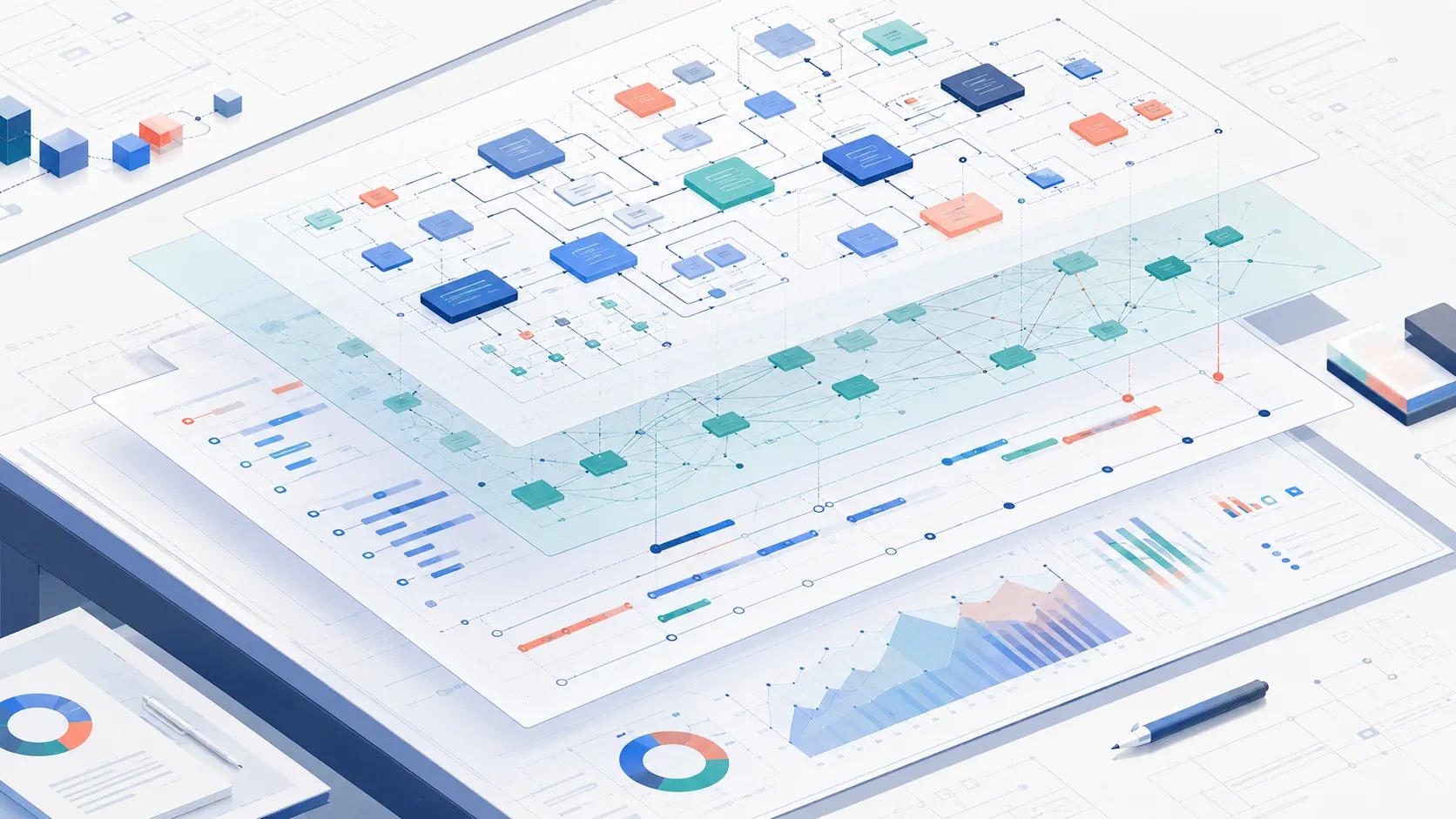
Current state graph. The platform rendered an interactive architecture model containing more than 1,400 components and an extensive dependency graph spanning the two main monoliths and the surrounding services. The most consequential output of this stage was the visualization of bounded-context candidates inside each monolith. Modules that shared transactional state but had distinct functional ownership were identified through analysis of the call graph and the database access patterns, which gave the bank's architects a defensible basis for the decomposition strategy that previous attempts had failed to produce.
Recommendations under the 6R framework. The platform produced component-level 6R recommendations weighted toward refactoring and rearchitecting for the strategic core, with replatforming recommended for a set of supporting applications where the migration economics did not justify a full rework. Each recommendation carried a confidence score and an evidence trail back to the underlying analysis, which addressed the regulatory traceability requirement directly. The bank's architecture team reviewed the recommendation set and accepted more than seventy percent of recommendations without modification, with the remainder adjusted to reflect contextual factors the platform could not infer from code alone.
Business case for Azure. The platform generated a 12-page executive decision report with current-state TCO derived from the bank's existing infrastructure cost basis, target-state TCO calculated against Azure pricing through the cost calculator API, ROI and IRR analysis at both the application and portfolio level, and a five-year cost trajectory. The IRR projection cleared the CFO's pre-set threshold by a meaningful margin, which was the single most important result for the program's board approval.
Implementation roadmap. A four-phase roadmap was generated with dependency-aware sequencing, prioritizing the decomposition of the two main monoliths in a sequence the platform derived from the bounded-context analysis. The roadmap was exported in MS Project format and used as the underwriting artifact for the Azure partner funding application.
The CTO's office maintained executive ownership across the engagement, with the platform analytical work overseen by the bank's internal architecture team. No external consulting capacity was engaged for the assessment.
Results
The assessment compressed from the bank's prior estimate of four to six months to three weeks of elapsed time, again consistent with ArchWeaver's reported 40 to 60 percent compression range. The artifacts produced through the engagement enabled three program-level outcomes that the CTO had identified as critical.
The Azure partner funding application was submitted within the program's required window and was approved by Microsoft on a timeline consistent with Azure Migrate and Modernize program norms. The platform-generated assessment and roadmap formed the analytical core of the funding submission. The partner funding offset a meaningful share of the program's first-year cost, which preserved the CFO's required IRR profile through the early phases of delivery where modernization investment is heaviest.
The supervisor-facing change management documentation derived from the assessment artifacts directly. Because every recommendation in the platform output is traceable to specific components in the graph model, the bank was able to produce regulator-grade change management documentation as a near-direct export from the assessment, rather than as a separate workstream. This was flagged by the bank's internal audit function as the single largest efficiency gain in the engagement.
The decomposition strategy that had stalled in previous attempts was resolved at the architectural level. The bounded-context analysis the platform produced gave the architecture team a defensible basis for the cuts, and the program is now executing the first phase of monolith decomposition against that strategy. Production incident rates during the early phase of migration have tracked toward ArchWeaver's reported 70 percent reduction relative to the bank's prior migration history, which the CTO has cited as the most important operational data point for the board's continued confidence in the program.
Five-year infrastructure cost reductions are projected at roughly 30 percent against the bank's pre-modernization run-rate, with the savings concentrated in the application server licensing footprint and the data tier where managed Azure services replaced an aging on-premise database estate.
The CTO has retained ArchWeaver as a continuous assessment platform for the duration of the program, with the deployment now serving as the governance artifact for architectural drift management against the approved target state. This use pattern was scoped into the engagement from the start, on the basis that a multi-year regulated transformation cannot be governed against a static assessment document.